
about
our story
About Niyla
Hi, I’m Niyla. I’ve been photographing cars for several yearS, with a particular passion for older models. I enjoy bringing vintage vehicles to life in shoots and meeting new people at car meets. You’ll often find me at car meets in colorado with a camera or iPhone in hand, capturing details and character. Check out my Instagram to see more of my work.
about lia
Hi, I’m Lia. I’ve been a professional photographer since 2019, specializing in senior portraits and automotive photography. I’m dedicated to creating authentic, meaningful images that tell your story, and I strive to make every session relaxed, comfortable, and enjoyable. My goal is to deliver thoughtful, timeless photographs you’ll cherish for years to come.
-
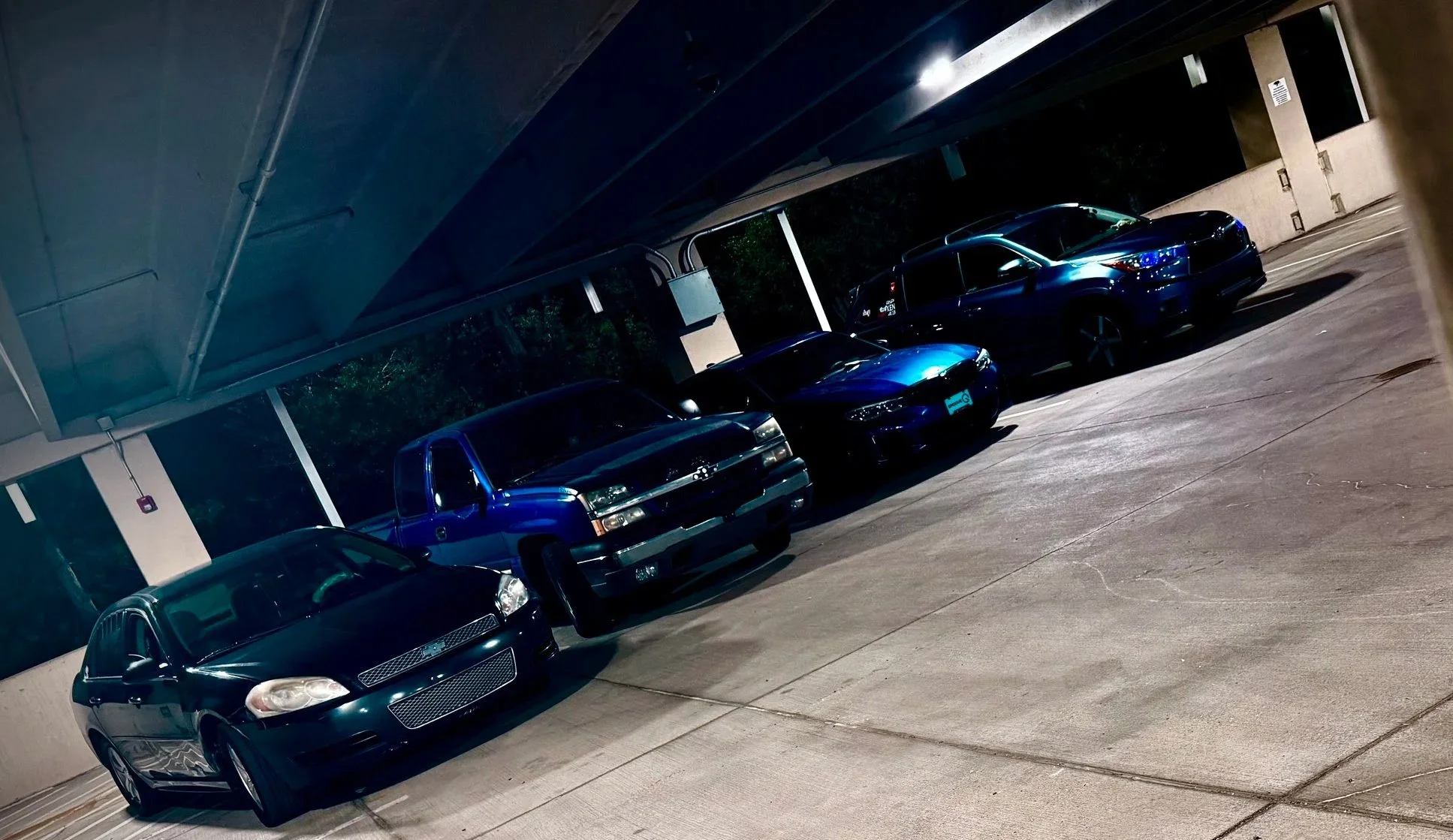
we shoot car meets across Colorado with a focus on capturing atmosphere, car detail, and the personalities that make each event unique.
Gear and setup
Camera: I use a reliable mirrorless body for low weight and good high-ISO performance. Two bodies let me keep one on a wide/standard zoom and one on a longer prime or telephoto.
Lenses: My go-to combo is a 24–70mm for versatility, a 50mm or 35mm prime for environmental portraits and low-light work, and a 70–200mm for isolating details and compressing scenes. For dramatic close-ups I sometimes carry a 100mm macro.
Accessories: A small, lightweight tripod or monopod when I expect long exposures; extra batteries and cards; a lens cloth; a compact flash or speedlight for controlled fill; circular polarizer to cut reflections.
Settings: Aperture-priority for most work so I can control depth of field, shutter priority for panning, or full manual when mixing flash with ambient. I favor mid-to-high ISOs when needed to preserve shutter speed and handholdability.
How I approach a meet
Scout the space: I arrive early if possible to check light, background options, and traffic flow. I note shaded pockets, reflective surfaces, and where cars will congregate.
Read the light: Denver and mountain towns can give harsh midday sun or long, warm golden hours. I use shadows to shape cars and try to schedule key shots during softer light at dawn/late afternoon.
Choose subjects intentionally: I look for interesting builds, color contrasts, unique details, or owners who want portraits. I balance crowd favorites with lesser-known builds to tell a fuller story.
Work the scene: Move around each car—front three-quarter, rear, profile, wheel details, interior shots. I shoot low for a powerful stance and high for context. I photograph interactions: owners chatting, drivers prepping, kids admiring cars.
Background control: I watch for cluttered backgrounds (trash cans, poles) and reposition the camera or the car when possible to clean the frame. In busy meets I use wider apertures to blur distractions.
Techniques I use
Panning: Shutter around 1/30–1/60s depending on speed; use continuous focus and smooth follow-through to show motion.
Static car drama: Low angle, wide lens up close, and a tight depth-of-field on details like badges, wheels, or headlights.
Reflections: I either embrace reflections for storytelling or reduce them with a polarizer and careful angle choice. For crisp reflections I use clean, shallow-angle light.
Night and light-painting: I use long exposures on a tripod and sometimes a light source to paint highlights on a car’s body for dramatic results. Balance ambient street lights and car lights by adjusting exposure and using controlled flash when needed.
Flash and fill: Off-camera flash or a diffuser on-camera for balanced fill in harsh shade or to freeze motion in low light. I dial down flash power to keep ambient color and mood.
Working with people
Be approachable: A quick introduction and showing a few shots builds trust. Many owners also want documented photos for social media, and I share a few previews on the spot when practical.
Respect the cars: I don’t touch vehicles without permission. I ask before opening doors or moving items.
Capture personalities: I ask owners about favorite mods or backstory, then use those details to guide portrait poses and contextual shots.
Post-processing workflow
Cull ruthlessly: I delete duplicates and keep only the strongest frames.
Color and contrast: I maintain accurate color for paint tones but will selectively boost vibrance or contrast for impact. In Colorado, I often emphasize warm golden-hour tones or the cool blues of mountain light.
Retouching: Remove small distractions (dirt on ground, sensor spots) but avoid over-smoothing paint textures. For editorial or client work I correct perspective and lens distortion.
Export sizes: I output full-res for owners and prints, and optimized web versions for social that keep detail while loading quickly.
Practical tips for Colorado meets
Weather-ready: Colorado weather changes fast—pack a light rain jacket, lens caps, and weather sealing covers.
Elevation: Higher altitude affects battery life and sometimes camera operation—carry spares.
Lighting extremes: Snow and bright skies demand careful exposure compensation to avoid blown highlights or underexposed shadows.
Regulations and safety: Be aware of private-property rules and local ordinances. Keep a safe distance from moving cars and respect any barriers.
Storytelling mindset I treat each meet as a short documentary: what brought
I shoot car meets across Colorado with a focus on capturing atmosphere, car detail, and the personalities that make each event unique.
Gear and setup
Camera: I use a reliable mirrorless body for low weight and good high-ISO performance. Two bodies let me keep one on a wide/standard zoom and one on a longer prime or telephoto.
Lenses: My go-to combo is a 24–70mm for versatility, a 50mm or 35mm prime for environmental portraits and low-light work, and a 70–200mm for isolating details and compressing scenes. For dramatic close-ups I sometimes carry a 100mm macro.
Accessories: A small, lightweight tripod or monopod when I expect long exposures; extra batteries and cards; a lens cloth; a compact flash or speedlight for controlled fill; circular polarizer to cut reflections.
Settings: Aperture-priority for most work so I can control depth of field, shutter priority for panning, or full manual when mixing flash with ambient. I favor mid-to-high ISOs when needed to preserve shutter speed and handholdability.
How I approach a meet
Scout the space: I arrive early if possible to check light, background options, and traffic flow. I note shaded pockets, reflective surfaces, and where cars will congregate.
Read the light: Denver and mountain towns can give harsh midday sun or long, warm golden hours. I use shadows to shape cars and try to schedule key shots during softer light at dawn/late afternoon.
Choose subjects intentionally: I look for interesting builds, color contrasts, unique details, or owners who want portraits. I balance crowd favorites with lesser-known builds to tell a fuller story.
Work the scene: Move around each car—front three-quarter, rear, profile, wheel details, interior shots. I shoot low for a powerful stance and high for context. I photograph interactions: owners chatting, drivers prepping, kids admiring cars.
Background control: I watch for cluttered backgrounds (trash cans, poles) and reposition the camera or the car when possible to clean the frame. In busy meets I use wider apertures to blur distractions.
Techniques I use
Panning: Shutter around 1/30–1/60s depending on speed; use continuous focus and smooth follow-through to show motion.
Static car drama: Low angle, wide lens up close, and a tight depth-of-field on details like badges, wheels, or headlights.
Reflections: I either embrace reflections for storytelling or reduce them with a polarizer and careful angle choice. For crisp reflections I use clean, shallow-angle light.
Night and light-painting: I use long exposures on a tripod and sometimes a light source to paint highlights on a car’s body for dramatic results. Balance ambient street lights and car lights by adjusting exposure and using controlled flash when needed.
Flash and fill: Off-camera flash or a diffuser on-camera for balanced fill in harsh shade or to freeze motion in low light. I dial down flash power to keep ambient color and mood.
Working with people
Be approachable: A quick introduction and showing a few shots builds trust. Many owners also want documented photos for social media, and I share a few previews on the spot when practical.
Respect the cars: I don’t touch vehicles without permission. I ask before opening doors or moving items.
Capture personalities: I ask owners about favorite mods or backstory, then use those details to guide portrait poses and contextual shots.
Post-processing workflow
Cull ruthlessly: I delete duplicates and keep only the strongest frames.
Color and contrast: I maintain accurate color for paint tones but will selectively boost vibrance or contrast for impact. In Colorado, I often emphasize warm golden-hour tones or the cool blues of mountain light.
Retouching: Remove small distractions (dirt on ground, sensor spots) but avoid over-smoothing paint textures. For editorial or client work I correct perspective and lens distortion.
Export sizes: I output full-res for owners and prints, and optimized web versions for social that keep detail while loading quickly.
Practical tips for Colorado meets
Weather-ready: Colorado weather changes fast—pack a light rain jacket, lens caps, and weather sealing covers.
Elevation: Higher altitude affects battery life and sometimes camera operation—carry spares.
Lighting extremes: Snow and bright skies demand careful exposure compensation to avoid blown highlights or underexposed shadows.
Regulations and safety: Be aware of private-property rules and local ordinances. Keep a safe distance from moving cars and respect any barriers.
Storytelling mindset I treat each meet as a short documentary: what brought people together, how cars reflect their owners, and how place (mountains, city streets, parking lots) shapes the scene. My aim is
-
we shoot cars, people, and events with an efficient, flexible approach tailored to each situation.
Car shoots with owner groups
Pre-shoot coordination: confirm location, time (golden hour if possible), number of cars, and any special requests. Create a simple shot list to cover group formations, individual cars, and detail shots.
Arrival and setup: scout the lot quickly to find best backdrops and spacing; direct owners to arrange cars for flow and variety; set up camera, lenses (wide for group, medium/tele for individual), and lighting or reflectors if needed.
Pacing and direction: work through group formations first, then capture individual cars while owners can interact or relax; give concise, clear directions to get natural poses and confident drivers.
Details and variety: shoot grills, badges, wheels, interiors, and creative angles; include lifestyle shots of owners with their cars when requested.
Wrap and delivery: confirm any special deliverables (edited files, prints), back up images, and provide a simple edit list.
Car shoots without owner groups (single or staged cars)
Planning: choose location and time to match the car’s style; plan compositions and any props or assistants.
Setup and execution: use controlled spacing and positioning, focus on clean backgrounds, use reflectors/portable lights for highlight control, and vary focal lengths for dramatic perspectives.
Creative touches: use motion blur for moving shots, low angles for aggressive stance, and shallow depth-of-field for detail emphasis.
Post-shoot: cull and edit consistently to maintain color and contrast across the set.
High school shoots
Communication and consent: confirm permissions, release forms, and guardian details if required.
Location and wardrobe guidance: suggest flattering spots on campus or nearby locations and quick outfit tips to avoid clashing patterns or logos.
Fast-paced direction: give concise posing cues, capture multiple expressions quickly, and include both posed and candid shots to reflect personality.
Group and individual balance: for senior groups or teams, plan formations; for portraits, vary headshots, three-quarter, and full-length frames.
Delivery: offer proof galleries for selection and consistent retouching that preserves a natural look.
Couple photo shoots
Pre-session consultation: discuss mood, outfits, and meaningful locations; plan a timeline for golden hour or varied lighting.
Comfortable pacing: start with simple, guided poses to build rapport, then move to more natural interactions and candid moments.
Variety in frames: capture wide environmental portraits, mid-length interactions, and close emotive details (hands, looks, gestures).
Direction and storytelling: use prompts that spark genuine reactions (ask about how they met, have them walk, whisper, dance), and frame shots that tell their story.
Final edits: deliver a balanced set of color and black-and-white images with natural skin tones and consistent styling.
Across all shoot types, I prioritize clear communication, efficient time management, a consistent